Research findings
Evidence for an effective therapeutic intervention for adopted children recovering from trauma
Family Futures has been working with children and families for almost 28 years. Our holistic therapy is centred around each child’s individual needs and experiences and has changed the lives of hundreds of children through its ground breaking approach to healing the brain and body together.
Family Futures’ peer reviewed research, published in the Journal of Child Abuse & Neglect, November 2019, provides evidence that a therapeutic intervention which is neuro-developmental and holistic in approach improved outcomes for adopted children who had experienced developmental trauma. Read more about Family Futures’ peer reviewed 2019 research paper here.
The 2019 research paper is a follow up to earlier research published in the Journal of Clinical Child Psychology and Psychiatry, 2016, which focused on the outcomes for children who received Family Futures’ NPP model of therapy (Neuro Physiological Psychotherapy).
Key findings of Family Futures’ 2019 research
Results from psychological screening questionnaires indicated:
• There was a significant difference between the treatment and control groups’ executive functioning. Executive functioning refers to abilities to self-regulate, manage information, make decisions and plan ahead. The treatment group made significant improvements on the Global Executive Composite (a total executive functioning score), Behavioral Regulation Index and Metacognition Index domains of the Behavioral Rating Inventory of Executive Function (BRIEF). The control group continued to present with the same levels of executive functioning difficulties that they had at assessment.
• Children who received the NPP model presented with significantly less emotional and behavioural problems and Externalizing Behaviours as measured by the Child Behaviour Checklist (CBCL) at re-test. In comparison, the control group continued to present with the same level of difficulties that they had at assessment.
• Children who received the NPP model showed significant improvements in global mental health including self-esteem and self-image, as measured by the Assessment Checklist for Children (ACC). However, the control group continued to present with the same difficulties and in some cases these difficulties had worsened over time.
Improved relational functioning and Health, Education and Criminality Outcomes
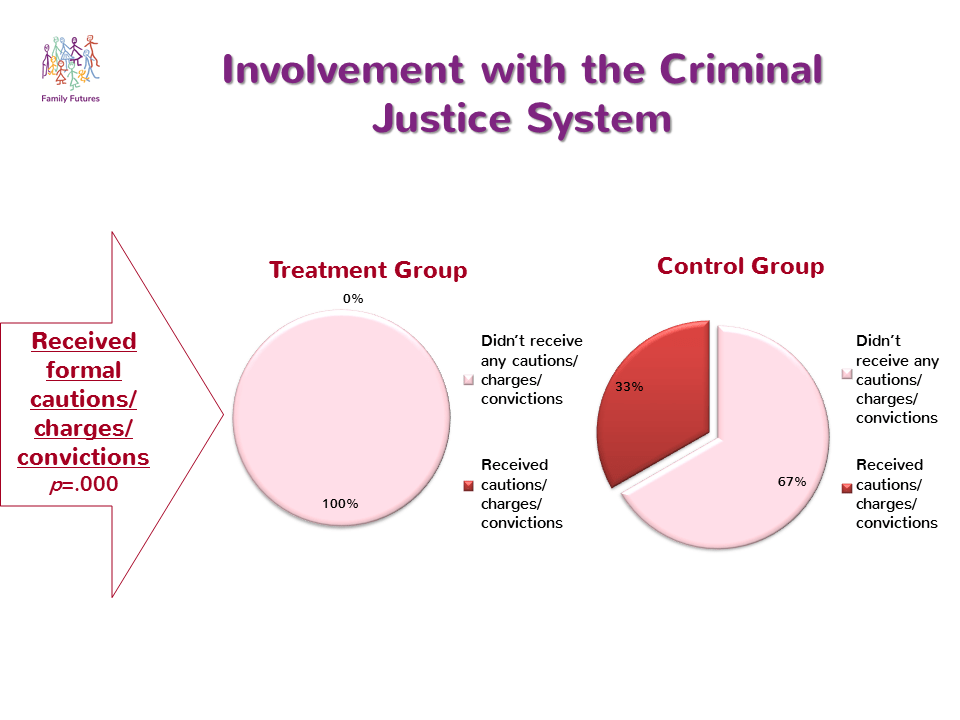
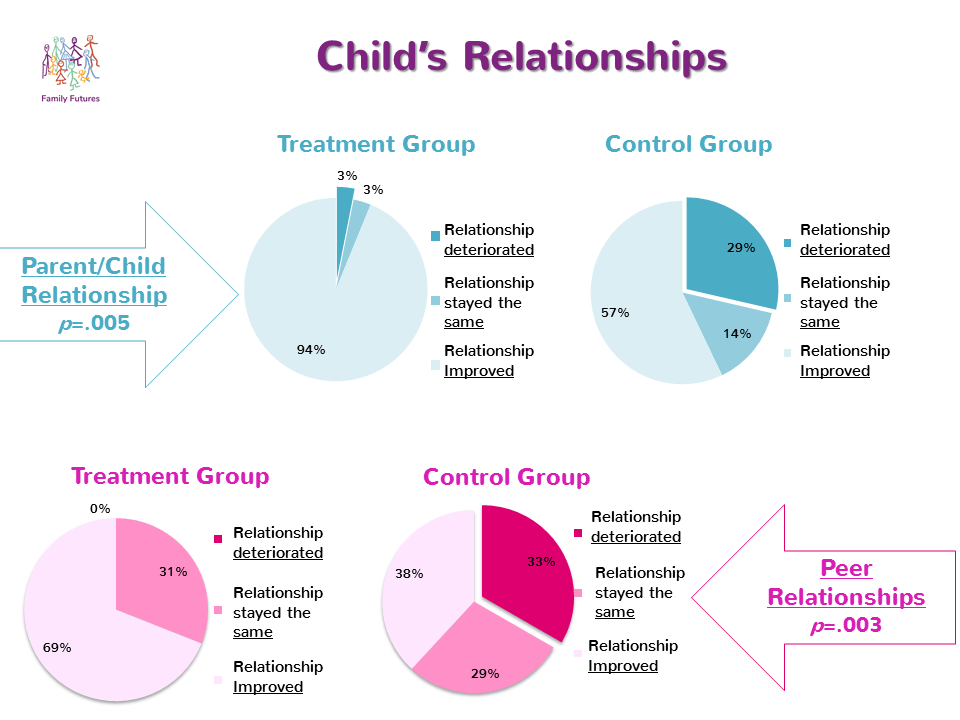
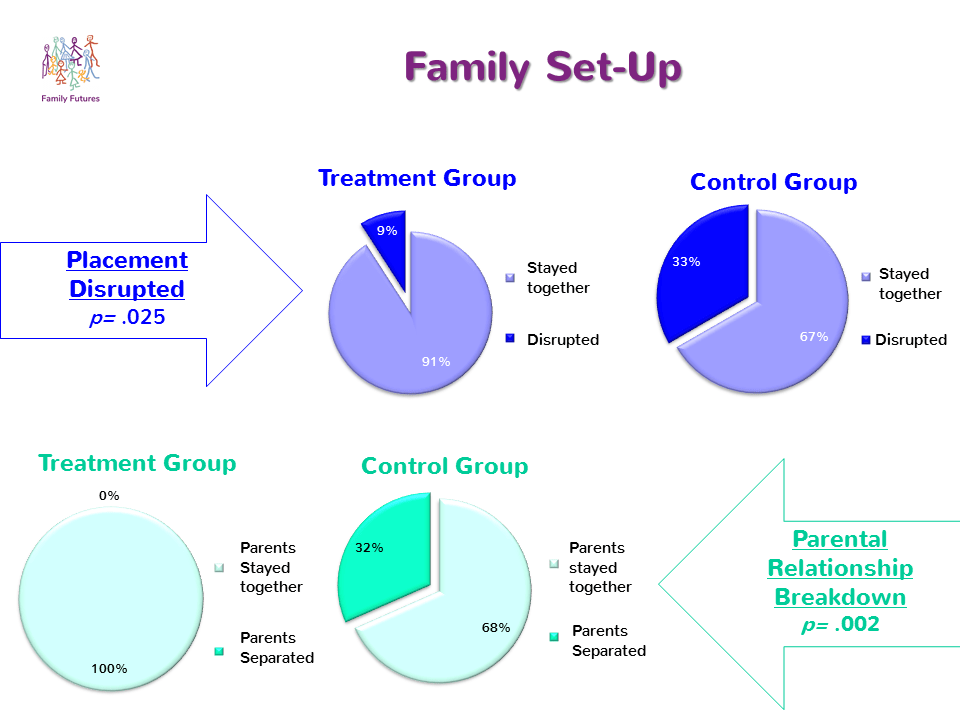
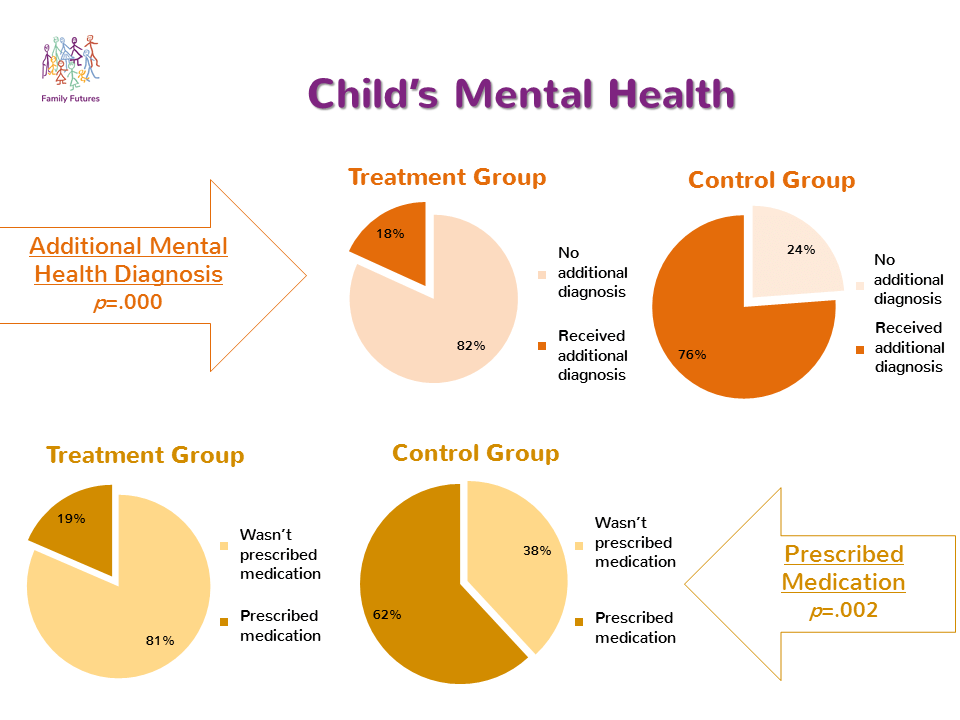
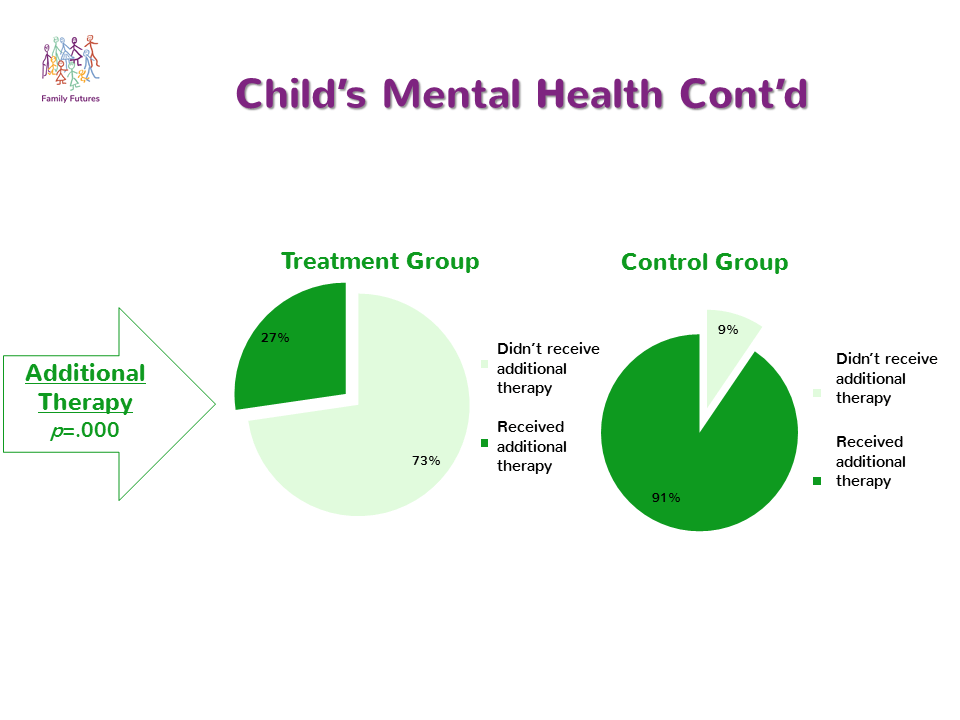
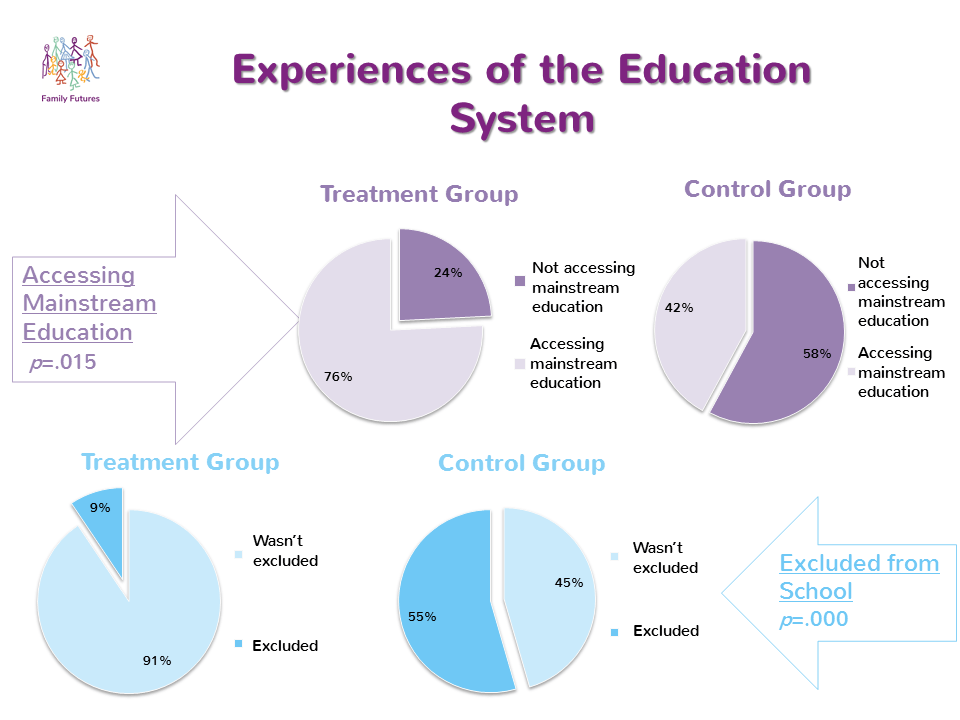
The charts below show findings for the children and young people who received NPP therapy compared with those who did not, in the following areas :
- Child’s relationships
- Family set-up
- Mental health
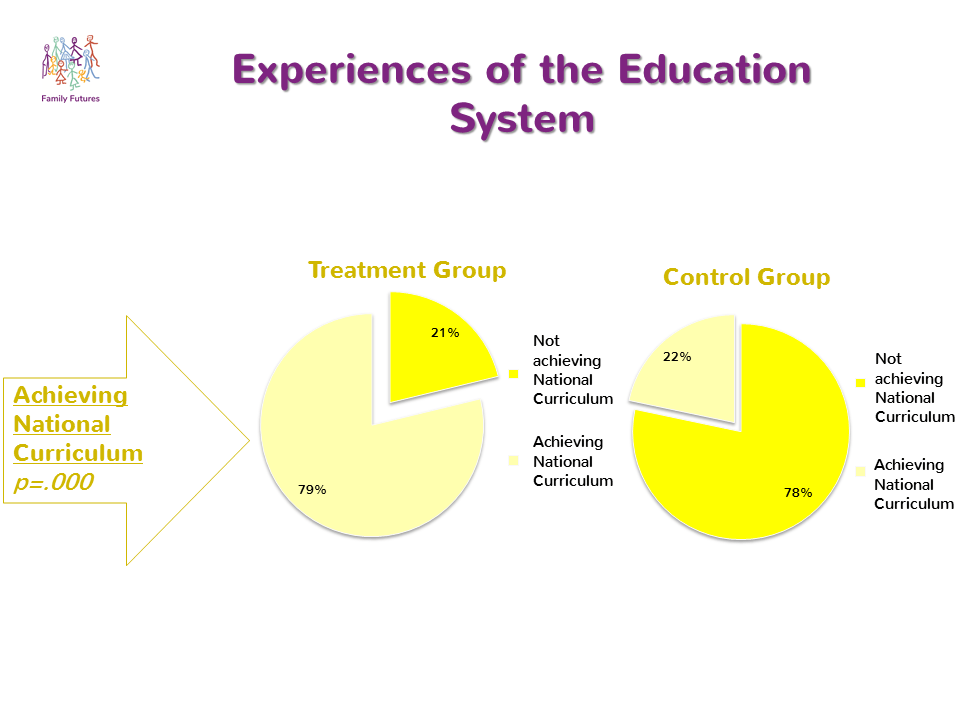
- Experiences in the education system
- Involvement in the criminal justice system
Click the headings below to view diagrams for each outcome:
Family Set-Up
Child's Mental Health
Experiences of the Education System
Involvement in the Criminal Justice System