Archive: News
Why early therapeutic intervention matters: what contemporary research tells us
By Maria Kondratchik, Child Psychotherapist
Across the last two decades, evidence from neuroscience, developmental psychology and clinical research has become unequivocal: early therapeutic intervention is one of the most powerful protective factors in a child’s developmental trajectory, especially for those who have experienced trauma, instability or multiple placements.
Early intervention does not simply reduce symptoms. It shapes the architecture of the brain, strengthens emotional regulation, and supports the development of relational capacities that become increasingly difficult to build later in life.
Early Childhood as a Window of Opportunity
The first decade of life is marked by exceptionally high neuroplasticity. The child’s brain is more responsive — positively and negatively — to relational experience than at any later stage. Two implications follow:
- Early trauma has disproportionately strong effects.
- But therapeutic support in childhood can be more effective because the brain is still fundamentally malleable.
Research shows that early intervention promotes the development of:
- emotional regulation
- attentional control
- attachment security
- stress resilience
- cognitive flexibility
- capacity for social understanding and relationships
When we intervene early, the work is not to “undo” entrenched defensive structures; it is to support healthier internal models before defensive systems consolidate.
What the Science Shows: Key Findings
1. Early interventions significantly reduce emotional and behavioural difficulties
A comprehensive 2024 review of early childhood mental-health programmes (ages 4–9) found robust, consistent improvements across emotional, behavioural and relational domains.¹
2. Therapy is effective even for children in residential care
A 2024 systematic review of interventions for children in residential settings demonstrated significant improvements in emotional regulation, trauma symptoms and interpersonal functioning — even among those with severe histories of adversity.²
3. Early developmental intervention improves functioning
A meta-analysis of early intervention programmes for developmental, emotional and social difficulties found moderate-to-large effects across developmental domains.³
4. Early support reduces the risk of symptoms becoming chronic
A 2023 evidence review (infancy ? adolescence) shows that early intervention reduces the likelihood that early emotional difficulties turn into chronic mental-health disorders.
Why Later Intervention Is More Complex
As children grow older, several processes consolidate:
- defensive structures linked to trauma
- internal working models based on mistrust
- rigid coping strategies
- avoidance of relationships
- chronic hypervigilance or shutdown
Therapists must work not only to build new relational capacities but also to disentangle defensive systems that were once adaptive for survival. This work is possible — and often transformative — but requires greater stability, consistency and time.
Early Intervention as Prevention, Not Just Treatment
Research shows that early therapeutic work:
- reduces the likelihood of chronic anxiety or depression
- prevents the accumulation of shame and self-blame
- supports development of mentalisation and reflective capacity
- improves educational and social outcomes
- reduces adolescent risk behaviours (self-harm, substance use)
- strengthens relational attachment patterns
In essence, early therapeutic input is not simply care for the present moment — it is an investment in the adult the child will become.
Implications for Practice
For children who have experienced trauma, early intervention:
- prevents consolidation of pathological attachment patterns
- allows traumatic experiences to be processed before they form the core of the inner world
- provides a stable, reliable adult relationship essential for long-term development
- supports emotional regulation and behavioural stability
- builds a foundation for later independence and relational resilience
In a system where children may experience multiple moves, inconsistent support or prolonged waiting times, early therapy becomes not just a clinical recommendation but a developmental safeguard.
References
- Interventions for Young Children’s Mental Health: A Review of Systematic Reviews and Meta-analyses (2024). Available at: https://pmc.ncbi.nlm.nih.gov/articles/PMC10465658/
- Effectiveness of mental-health interventions for children and adolescents placed in residential care, Child & Youth Services Review (2024). Available at: https://www.sciencedirect.com/science/article/pii/S0190740924005012
- Efficacy of Early Intervention Programmes for Developmental Difficulties in Early Childhood (2024). Available at: https://journals.copmadrid.org/psed/art/psed2024a1
- Early intervention and mental health: evidence review from infancy to adolescence, Pediatric Medicine (2023). Available at: https://pm.amegroups.org/article/view/5971/html
December 2025
Rethinking adoption support – putting children first
By Jay Vaughan, CEO, Family Futures
The BBC’s recent investigation into adoption, published last week (28 November 2025) has rightly prompted widespread concern. For those of us who have spent decades supporting children affected by early adversity and trauma, the issues highlighted are all too familiar. Many families have been in touch with me in the past few days to say that the painful experiences highlighted in the news reflect their own experience. This needs to change if children are to thrive in their adoptive families.
We need to look at what we’ve learnt from families and what needs to change so that children can recover from trauma and achieve their potential in life.
A system of support not fit for purpose
Family Futures was founded in 1998 because post-placement therapeutic support simply did not exist. At that time, adoption placements were already shifting from relinquished infants towards older children with complex histories of abuse, neglect and loss in their early developmental years. The need for a trauma-informed, multidisciplinary approach was clear then, and it remains as urgent as ever now.
I have worked with children from the care system for more than 35 years. The experiences described by families in the recent news stories reflect what we see daily at Family Futures in our Complex Trauma Service. Most adopted children have complex developmental trauma as a result of early life abuse, neglect and loss.
This appears in everyday life in different ways including: emotional dysregulation, difficulties with trust and attachment, heightened anxiety or vigilance, shutdown, impulsive reactions, sensory sensitivities, challenges at school, low self-esteem, boundary issues and food-related behaviours. Clearly, each individual child will have a different level and range of support needs but what is clear is that all children who have experienced trauma will need support to go on to thrive in their lives.
As families have said so powerfully when speaking out about their experiences, “love is not enough”.
Many of the children being placed for adoption or under special guardianship orders today are among the most developmentally traumatised in the country. Yet the system still offers no multidisciplinary assessment prior to placement, and there is no coherent model of early intervention so that their needs can be supported from the outset.
Children and families are left to cope with developmental trauma without support. Too many children do not meet the threshold for CAMHS, and, with the instability of ASGSF funding (Adoption and Special Guardianship Support Fund), there is now a chasm in provision.
We know where this leads. Without early, specialist support, the same children who struggle in their adoptive, kinship or foster care placements today become the adults who require high-cost interventions in the future: psychiatric hospital admissions, custodial sentences, or long-term homelessness. The emotional cost to each young person and their family is unacceptably high, with a huge financial cost to society as well.
Giving children a chance to heal from trauma
When we assess children’s needs holistically at Family Futures with our team of specialists looking at children’s needs through different lenses (sensory, psychological etc) – it isn’t just an accurate diagnosis that we can provide. It is the very foundation for effective support that is going to change that child’s life and set them up on a positive trajectory. Without this multidisciplinary assessment and tailored support, we see escalating needs and family crises where children are left to struggle or offered a ‘one size fits all’ intervention that misses the mark.
Families often say to us that the multidisciplinary assessment is the first time their child’s behaviours make sense and they can start to understand how their child can be helped. Next comes the crucial question: how can they get the vital therapeutic support their child needs?
The ASGSF did, for a time, make a difference. As Adoption UK’s annual Adoption Barometer has shown, the ASGSF gave some families access to therapeutic support that would otherwise have been out of reach for them. However, the drastic cuts to the fund this year, the delays and the uncertainty about its future have left many children with significant gaps in treatment. Families are left with no clarity about what lies ahead. The resulting instability only compounds the trauma for children and the difficulties faced by families.
Meanwhile, the overall system is still failing to understand traumatised children. Instead of being offered early therapeutic intervention, parents are frequently criticised or blamed for their child’s behaviours. Group-based parenting programmes are often the default offer for adoptive families, despite having limited impact for children with complex developmental trauma, neurodiversity or FASD. Families tell us repeatedly when they come to us that they have previously felt judged rather than supported, while the parenting support they were offered did not help and has no evidence base.
Permanency for children without support is not sustainable
Family Futures is both a Voluntary Adoption Agency (VAA) and a therapeutic service. As a VAA, we recruit, assess and approve people to become adoptive parents as part of our iAdopt service. iAdopt is unique in offering a free multidisciplinary assessment prior to placement. When we set up iAdopt we decided it was vital for us to invest in children’s futures by offering this holistic assessment of needs as part of our not-for-profit service. We know from our experience of working with local authorities that most do not have the budget for this and sometimes we hear the view that children “just need time to settle.”
Our experience demonstrates the opposite: children settle because they are supported.
Following the drastic ASGSF cuts this year, families are now left with significantly reduced access to the level of assessment and therapy than was previously possible. The previous £5,000 annual ASGSF allocation for adoptive families, plus £2,500 for an assessment, provided a far more realistic budget for early therapeutic work that helped families feel supported and set them up for long-term stability.
As an adoption agency, Family Futures has had to make difficult ethical decisions. Recruiting adopters and placing highly complex children – often aged six, seven or eight – with no guaranteed post-placement support is not acceptable. We have launched a fundraising appeal and thanks to a generous donor who has enabled us to set up our fund for new families, we are now able to ensure our families receive guaranteed therapeutic help in the first year while longer-term funding is negotiated.
This is a pioneering model of support for adoptive families which is evidence based from our published, peer reviewed research of what works to improve traumatised children’s outcomes. However, this essential support should not be reliant on philanthropy. The government should be funding this support for our most vulnerable children as standard.
We need a fundamental rethink
The current model of adoption without adequate support is not fit for purpose. If we are serious about improving outcomes for traumatised children, we need a national shift in thinking.
Permanency planning must place therapeutic intervention at its centre, from pre-placement through to adulthood.
Our most vulnerable children need a coherent national model of trauma-informed support, ensuring adopters and special guardians are equipped to support children effectively and are not left isolated.
The BBC investigation and families speaking out have opened an important public conversation. We now need to draw on this lived experience of young people and families and include the clinical experience of trauma-informed specialists who have been working with families for decades and have seen what change is needed to move the dial. If we want to create lasting change, we must start by acknowledging that a permanent home and loving family is not enough for traumatised children.
Stability comes from supporting family life therapeutically so that children can heal and thrive.
04/12/2025
Adoptive families need consistent, funded support to thrive
Adoption can be transformative for vulnerable children and the parents who adopt them. However therapeutic support is essential in making this a positive life change. The recent BBC investigation and news stories highlight the shockingly high percentage of adoptive families who are in crisis as well as the devastating impact of the lack of support.
Our Complex Trauma Service at Family Futures works to keep families together and our experience over the past 27 years as well as our published research shows that the right support prevents families reaching crisis point.
If you’re worried about your family and want to find out more about support available, please call our advice line on 020 7354 4161. You can also read more information about our research showing positive outcomes for families who received holistic adoption support here www.familyfutures.co.uk/research-findings/

#AdoptionSupport #HelpingFamiliesHeal #Adoption
Personalised Post Adoption Therapy: Supporting Amari’s Journey
Family Futures’ post adoption support for new families
At Family Futures, we understand that the adoption assessment is just the beginning of a family’s journey. Every child brings their own story and emotional needs, shaped by early life experiences. Our iAdopt post adoption support services are designed to help adoptive families navigate this important transition, offering tailored therapeutic care that nurtures healing, attachment, and confidence – the right support at the right time.
Through our integrated, trauma-informed approach, we help children and parents build stronger relationships and develop the tools they need to thrive together. The following case study illustrates how our specialist team supported one family during their first year after adoption.
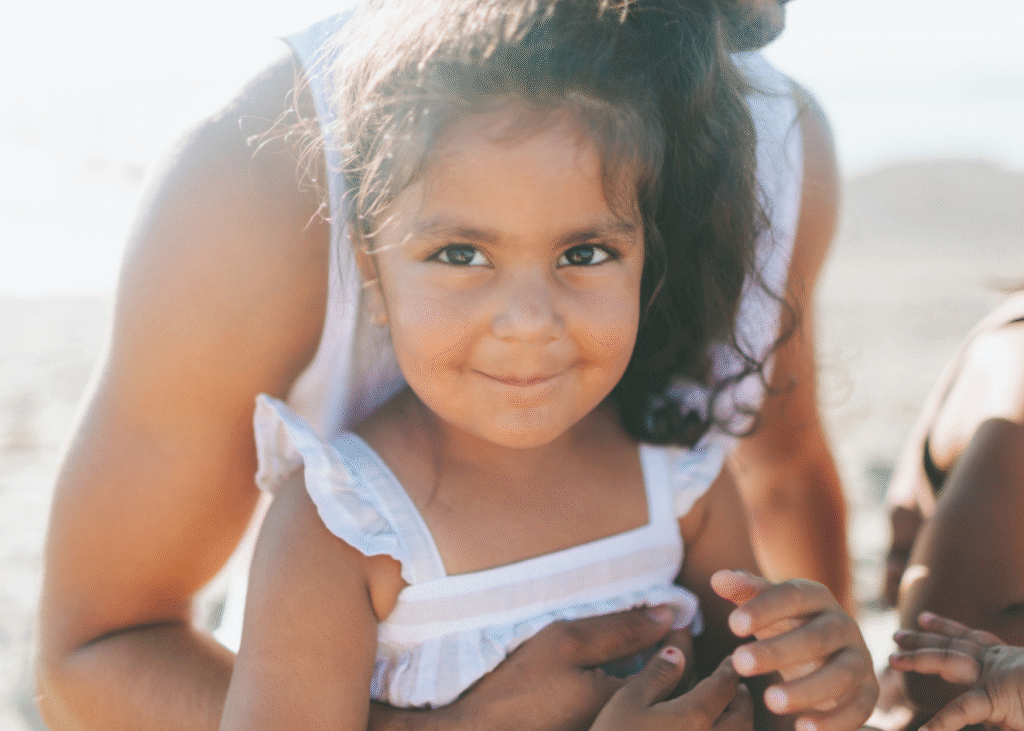
Case Study: supporting Amari through personalised post adoption therapy
Background
Amari* was five years old when she was placed with her adoptive parents, Ben and Sofia, through Family Futures. Before being adopted, Amari had experienced several moves between carers and early experiences of neglect in her birth family. These early disruptions left her anxious and easily dysregulated, with difficulties trusting adults and managing transitions.
Assessment and Planning
Family Futures worked closely with Amari’s new adoptive parents and her local authority social worker to develop a bespoke therapeutic plan. This collaborative process ensured that support was embedded within the placement from the beginning, focusing on Amari’s unique emotional, behavioural, and sensory needs.
How therapy helped Amari and her family
Amari attended weekly therapy sessions alongside her parents. These joint sessions were essential in strengthening their attachment and helping Ben and Sofia understand Amari’s behaviours within the context of her early trauma.
The intervention combined several evidence-based therapies:
- Sensory integration therapy with an occupational therapist – addressing Amari’s heightened sensitivity to touch and movement, which often led to distress in daily life.
- Attachment-focused play therapy – using play-based approaches to help Amari express her feelings safely and build trust with his new parents.
- Life story and transition work – helping Amari and her parents make sense of her experiences and adoption journey in a creative, age-appropriate way, supporting the development of her identity and sense of belonging.
Support for parents
Ben and Sofia also received ongoing support and guidance from Family Futures’ multidisciplinary team. Through parent sessions, they learned how trauma can influence children’s development and how to respond therapeutically to Amari’s emotional needs. These sessions gave them the confidence and tools to provide consistent, nurturing care at home.
Outcomes
Over time, Amari became more settled and secure. Her ability to regulate emotions improved, and she began seeking comfort from her parents when distressed – something she had previously been unable to do. Ben and Sofia shared that they felt more confident in understanding and supporting their daughter, and the family described a growing sense of connection, trust, and stability.
To learn more about how we can support your family:
- Find out how to start your adoption journey with iAdopt
- Read our latest Ofsted report – we’ve been rated Outstanding for the last 10 years
- Read our research – evidence for an effective therapeutic intervention for adopted children recovering from trauma
- If you are already an adoptive parent, foster carer or kinship carer, find out how our complex trauma service can support you
The Power of Psychoanalytic Therapy
By Maria Kondratchik, Child Psychotherapist

Can you think of a time when you really felt understood — when someone not only heard your words but also seemed to sense what you couldn’t put into them?
That feeling of being emotionally met is at the heart of psychoanalytic therapy.
As children, our first experiences of being seen and understood come from early relationships — the rhythm of feeding, the look of recognition, the sense that our feelings make sense to someone else. When these early experiences are disrupted by trauma, neglect, or loss, children often learn to protect themselves by shutting down emotionally or by acting out what they cannot say.
Psychoanalytic therapy provides a space where those early experiences can be re-imagined safely. The therapist’s task is not to correct behaviour but to help the child discover meaning in their emotions, thoughts and actions — to understand why they feel and react the way they do.
In therapy, words, play and silence all have meaning. A child may not be able to say “I’m frightened,” but they might build a wall of blocks, hide under a chair, or stare intently at the therapist. Over time, these moments become part of a shared story — one that connects feeling, thought and relationship.
For children who have experienced early trauma, this process can be transformative. When someone can think about their inner world with them, the child begins to think for themselves — and that is where real change begins.
My work at Family Futures is grounded in this approach. I trained in Infant Observation within the Tavistock tradition and studied with Joshua Durban at the Psychoanalytic Center of California, specialising in autism and early relational trauma. I’m particularly interested in how emotional and sensory experiences shape a child’s capacity to connect and to feel real.
Psychoanalytic therapy also fits naturally within Family Futures’ holistic model of care. It complements approaches such as Neuro-Physiological Psychotherapy (NPP), Theraplay, and Sensory Integration, by deepening our understanding of the child’s internal world and how this interacts with their body, relationships and environment. Working collaboratively across disciplines allows us to help each child rebuild both emotional security and developmental resilience.
Psychoanalytic therapy is, above all, about relationship. It offers children — and parents — a chance to experience what it means to be thought about, contained and understood, often for the first time.
If you think psychoanalytic therapy could help your child or family, please get in touch with the Family Futures Wellbeing Hub for more information or to arrange an initial consultation.
Maria works with children and families attending the Wellbeing Hub and the Complex Trauma services at Family Futures. Her approach is deeply rooted in psychoanalytic thinking while integrating creative methods, including play and arts-based interventions, to provide a safe and nurturing therapeutic space.
Family Futures welcomes Adoption UK’s statement highlighting the impact that changes to the Adoption and Special Guardianship Support Fund (ASGSF) are having on children and families
As a Voluntary Adoption Agency (VAA) we welcome Adoption UK’s focus on the very real consequences of the ASGSF changes. Almost 3,000 children with a plan for adoption are waiting, yet there are less than half that number of approved adopters. At a time when children urgently need families, prospective adopters are understandably hesitant to step forward when the support they may rely on is in doubt. The uncertainty surrounding the ASGSF is not only destabilising support for adoptive and SGO families, it is leaving children’s futures hanging in the balance.
The ASGSF represented a lifeline for thousands of children and families. Instead of cutting or reducing it, government should be building on what we know works – support that is consistent, collaborative, informed by evidence and guided by lived experience.
For over 27 years, Family Futures has provided specialist, research-evidenced assessment and therapy, rooted in lived experience and designed to work with families in crisis. Our multi-modal model is most effective when we work consistently with families, alongside the local authority social workers, as part of a truly collaborative team. The proposed changes will present further challenges for regions, local authorities and service providers who will have to meet the needs of children and families with even less resources.
As painful as this process has been the government now has the potential to create a system that genuinely works for adoptive and SGO families, and that could extend to foster families too. We know what helps children thrive and we must be bold enough to choose it.
You can find our published research and findings here.
Adrian’s story – EMDR therapist, NVR Practitioner and joining Family Futures
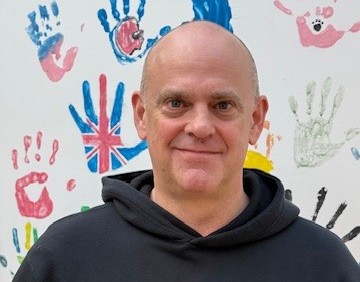
Adrian Perks, an Integrative Child and Adolescent Psychotherapist, joined Family Futures’ multidisciplinary team last year. Adrian explains how his personal journey as an adoptive parent inspired him to become a therapist.
What inspired you to become a therapist?
My personal experience of co-parenting an adopted child opened my eyes to the complexities of identity, attachment, and trauma. Being part of therapy sessions myself with my family had a profound effect on me feeling motivated to help others, to interrupt harmful cycles and build relationships from a place of awareness and to help other families navigate similar journeys.
Where did you train as a therapist?
I trained at Terapia, who are based in Finchley, London. Their programmes are designed for those passionate about working therapeutically with children, young people, and families.
Apart from your Terapia training, have you found any other areas useful for supporting Adoptive Parents and Special Guardians?
Yes, definitely. I am a Non-Violent Resistance (NVR) Informed Practitioner (Level 2) and a trained as an EMDR therapist, having completed Parts 1, 2 & 3 Adult EMDR Training, and Level 1 EMDR Child & Adolescent Training. Both these areas I have found helpful for parents, carers and children.
Can you say more about NVR?
NVR training can be a game-changer for adoptive parents navigating challenging behaviours, especially those rooted in trauma, attachment difficulties, or child-to-parent violence. NVR can offer the following:
- Empowerment without escalation: NVR teaches parents how to respond to aggression or defiance with calm, consistent presence rather than confrontation.
- Connection over control: It emphasizes rebuilding relationships and strengthening parental authority through non-punitive means.
- Supportive community: Many courses are group-based, allowing parents to connect with others facing similar challenges.
And what is EMDR?
EMDR stands for Eye Movement Desensitisation and Reprocessing—a powerful, structured form of psychotherapy designed to help people recover from trauma and distressing life experiences.
How it works:
- EMDR helps the brain “unstick” traumatic memories that haven’t been fully processed.
- During sessions, the therapist guides you to recall distressing memories while engaging in bilateral stimulation—usually side-to-side eye movements, tapping, or sounds. (I mostly use buzzers that are usually held in client’s hands.)
- This process is thought to mimic what happens during REM sleep, helping the brain reprocess the memory so it becomes less intense and emotionally charged.
What it helps with:
- Originally developed for Post-Traumatic Stress Disorder (PTSD), EMDR is now used for:
- Anxiety and panic disorders
- Depression
- Phobias
- Grief and loss
- Childhood trauma
- Addictions and more
EMDR is a NICE approved therapy.
Why did you join Family Futures?
Family Futures has been a pioneer in trauma-informed care in the UK for over 25 years, so I was motivated to be part of an organisation at the forefront of innovative therapeutic practice. I was interested to learn more about the Neuro Physiological Psychotherapy (NPP) model framework – which was created with a deep commitment to healing developmental trauma in children – especially those who are adopted, fostered or part of special guardianship orders.
If you are interested in EMDR therapy, you can contact The Family Futures Wellbeing Hub for a free consultation. We are currently offering EMDR to adults and adolescents and will be offering this intervention to younger children in the future.
For further information on NVR parenting and training, read more and listen to Adrian’s podcast episode here.
We’ve come too far to go backwards – funding children’s right to heal from trauma
By Jay Vaughan, CEO, Family Futures
There’s so much happening right now in children’s services that feels deeply wrong and it’s failing the very children we’re meant to protect. Children removed from their birth families due to abuse and neglect need a joined-up, integrated approach to heal from the trauma they have experienced – one that prioritises permanency, healing, and long-term wellbeing.
We’ve known since the 1990s that social work alone isn’t enough to provide a service that promotes therapeutic healing. That’s why Adoption Support Agencies were created and regulated by Ofsted – to provide the specialist, therapeutic support traumatised children need.
Now is the time for a complete rethink of how we provide the care and recovery that all care experienced children need. Our published research evidences that a unified, interdisciplinary service that brings together all professionals – social workers, psychotherapists, psychologists, teachers, paediatricians, psychiatrists, and sensory integration therapists – working collaboratively for care-experienced children brings about profound and lasting improvements in children’s outcomes. The children and young people who took part in our 2019 research had the highest level of ACE scores (Adverse Childhood Experiences) and yet their outcomes were significantly better following their therapeutic treatment programme than their peers who did not receive this support.
I understand, personally and professionally, the long-term impact of abuse and neglect and I have been working with traumatised children and listening to their experiences for over 27 years. Healing is slow, delicate work that requires specialist input. Six sessions or a year of support is rarely enough for children so traumatised that they may be too fearful of adults to even enter the therapy room at first.
The neuroscience is clear: trauma affects the nervous system in complex ways. We need neurosequential, multi-modal, long-term approaches. Parenting courses and peer support are valuable, but they must sit alongside integrated therapeutic services. There’s no single solution – only collaboration can provide children and young people with the holistic support they need to heal and thrive.
With the current spending review, due to be announced this week, Family Futures wrote recently to Rachel Reeves MP, Bridget Phillipson MP and Janet Daby MP outlining the devastating impact of ASGSF cuts on children like Beth – children who are not statistics, but individuals with complex trauma histories and who have the right to heal. As our letter states,
£3,000 is not enough to help these children heal or go on to thrive and contribute positively to society...These are shocking, drastic cuts for some of the most traumatised, vulnerable children in our society who deserve more, not less support to survive and thrive.
You can read Family Futures’ open letter to government ministers here
The real task is to build the best possible services for all care-experienced children, whether adopted, in kinship care, under special guardianship, or fostered. Let’s not go backwards to a time when families had to beg for help. We’ve come too far.
Ending on a note of positivity, the greatest joy in my work is hearing from young people, years later, who are navigating life with greater self-understanding and resilience. That is what professionals working in children’s social care are here for.
9th June 2025
Sydney’s letter to the Education Secretary – ASGSF funding cuts
Sydney, an adopted young person who has received therapy and support at Family Futures, speaks out for all adopted and kinship care children who are being denied a chance to heal by the recent cuts to the ASGSF (Adoption and Special Guardianship Support Fund). Please share this powerful letter or tag your MP on social media to help raise awareness of the impact of these changes on vulnerable children up and down the country who need us to share these important messages with the government and policy makers.
Sydney says in her letter:
“I’m asking you, from the heart, to please reverse this decision. Think about the children and young people who don’t have a voice — the ones too young or too afraid to speak up. I’m speaking for them now. We need you to invest in our futures. We need you to believe in us and to give us the tools to grow up feeling safe, supported, and strong.”
Watch Sydney’s mum, Angela, reading the letter at the Action Against ASGSF Changes protest march on 3rd May when a petition of 14,000 signatures was delivered to 10 Downing Street. The petition is still open for signatures here.
Rt Hon Bridget Phillipson MP
Secretary of State for Education
20 April 2025
Dear Secretary of State,
Re: Reduction in the Adoption Support Fund
My name is Sydney, I am a visually impaired adopted young person who suffered significant neglect and trauma in my early years and I am writing to you not just for myself, but for all the other adopted children and young people like me across the country. I am deeply disappointed and upset about the government’s decision to cut funding for therapy and mental health support for adopted children.
Adopted children often come from difficult and sometimes traumatic backgrounds. Many of us have experienced loss, confusion, separation from our birth families, and things we shouldn’t have had to go through so young.
Because of this, therapy isn’t just helpful — it is essential.
I know many other adopted children and young people who are struggling. Some don’t have the therapy they need, and I’ve seen how hard it is for them. They’re not okay — they’re hurting, and they need help. Therapy helps us understand our past, manage our feelings, and grow into strong and healthy adults. When you take away this funding, you’re taking away our chance to heal.
You say you care about children and young people, but your actions speak louder than words. If you truly care, you will listen to our voices. You will hear us when we say we need support — not just for a little while, but for as long as it takes. Therapy isn’t a luxury for adopted kids — it’s a lifeline.
Cutting this funding tells us that we don’t matter, that our pain doesn’t matter, and that our healing isn’t worth paying for. That is not okay.
I’m asking you, from the heart, to please reverse this decision. Think about the children and young people who don’t have a voice — the ones too young or too afraid to speak up. I’m speaking for them now. We need you to invest in our futures. We need you to believe in us and to give us the tools to grow up feeling safe, supported, and strong.
Please don’t turn your back on adopted children.
Yours sincerely,
Sydney
Image of the letter to share (click on the image below to download)
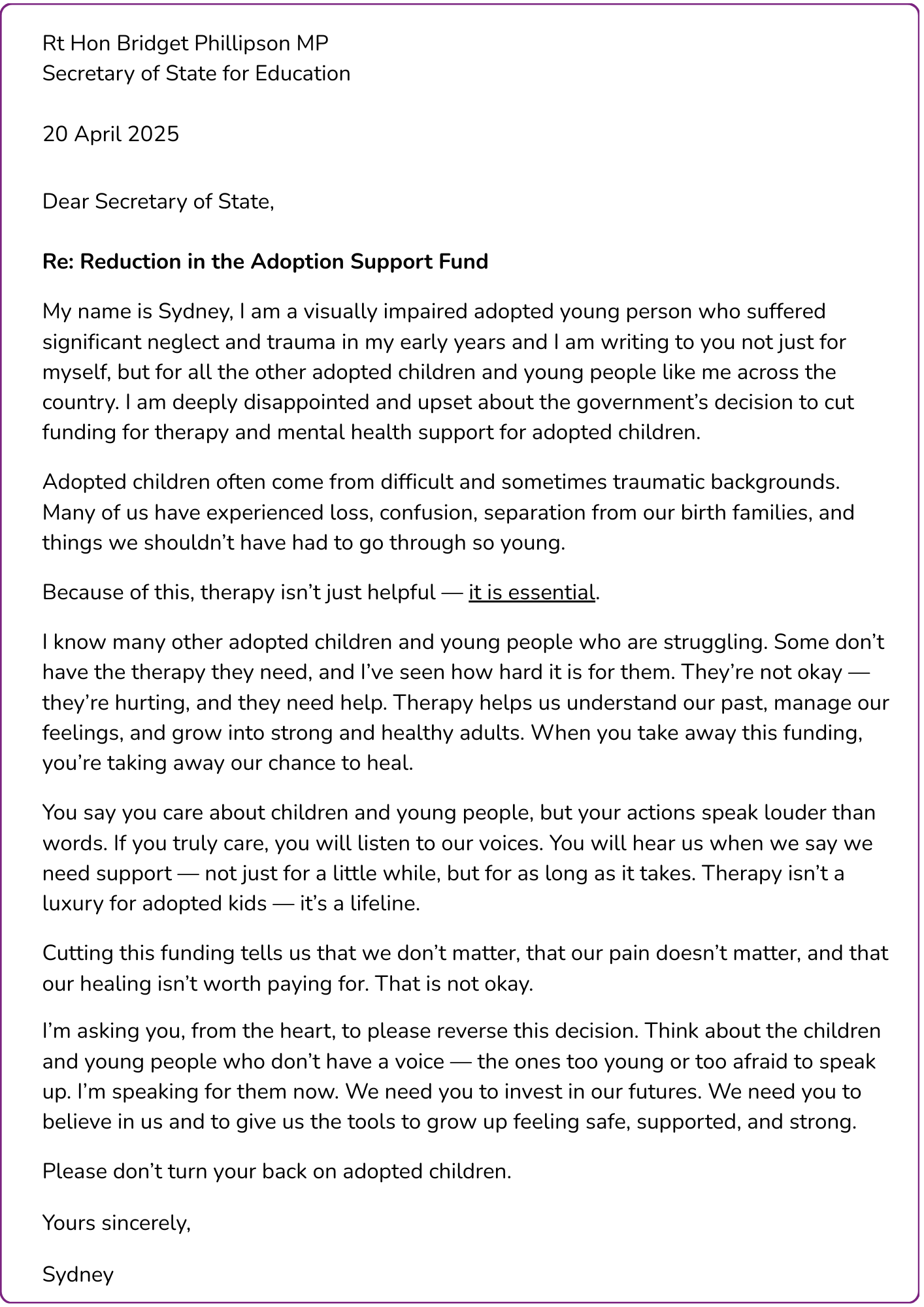
Download Sydney’s letter as a pdf attachment to send with a letter to your MP
ASGSF funding cuts – sign the petition and join the march
Click to sign the petition to reverse ASGSF funding cuts here.
The Adoption and Special Guardianship Support Fund provides vital therapy for traumatised children and has been drastically cut this month, leaving many vulnerable children and their families struggling and in crisis.
Clare, a parent whose daughters come to Family Futures for therapy, has set up a protest march and petition against the funding cuts to highlight the impact this is having on vulnerable children across England. Please share and help spread the word.
The protest march will take place on 3rd May at 1pm.