A Note on Language: With language constantly evolving, we now say ‘keeping in touch’ to better reflect the nuance of maintaining family links however, at the time of writing the term ‘contact’ was part of our terminology.
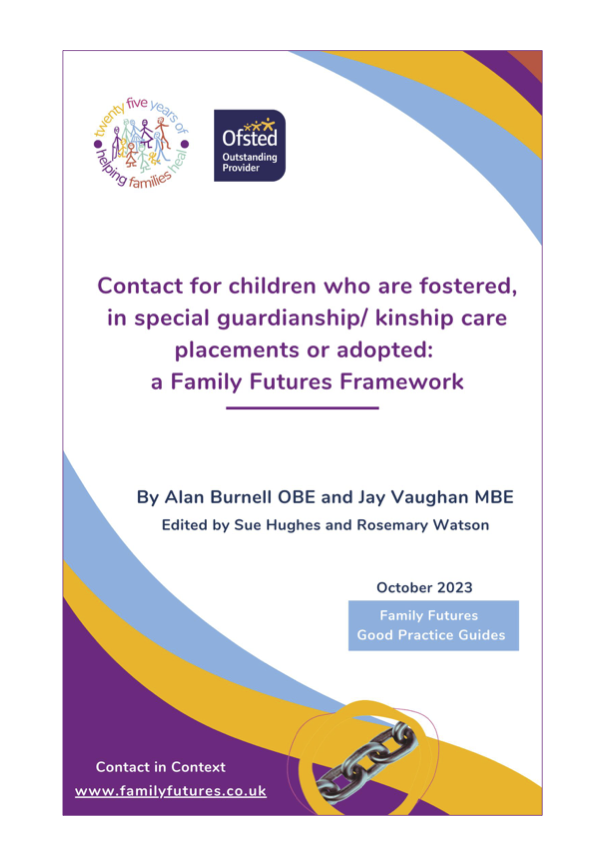
Keeping in Touch for children who are fostered, in special guardianship/kinship care placements or adopted: a Family Futures Framework
ISBN: 978-0-9556672-2-0
This good practice guide is designed to share Family Futures’ evidence-based good practice for professionals and families, centred around the individual child’s needs.
Family Futures has been facilitating contact for adopted, fostered and kinship children and families in the UK for 25 years. The framework is backed by Family Futures’ published research showing improved outcomes for children who received support with contact and life story work.
The majority of adopted, fostered and kinship care children today have experienced trauma in infancy which informs the approach and level of professional support required for all parties.
“Contact is a highly emotive experience and will inevitably raise many different feelings for each child. The danger is that if contact is made without any parental or professional intervention or facilitation, it can be re-traumatising, because the child is flipped back to the relationship they had when they were infants to the birth parent. This guide provides a framework which will empower you to assess and facilitate contact, in the context of the developmental needs of the child.”
– Alan Burnell OBE, adopted person and co-founder of Family Futures
The important consideration regarding any form of contact with anyone in the child’s
world is that it is in the child’s best interest and that it enhances their wellbeing. To
do this contact needs to enable the child to:
Contact: a Family Futures Framework includes step-by-step guides to face-to-face contact, online contact, sibling contact and contact with other birth family members, supporting the needs of all parties in a way that is centred around the child’s development.
Read the Executive Summary here
Please note, Contact: a Family Futures Framework guide is a 48-page downloadable publication (pdf format). Once you have completed payment, you will be able to download your electronic copy via a link.