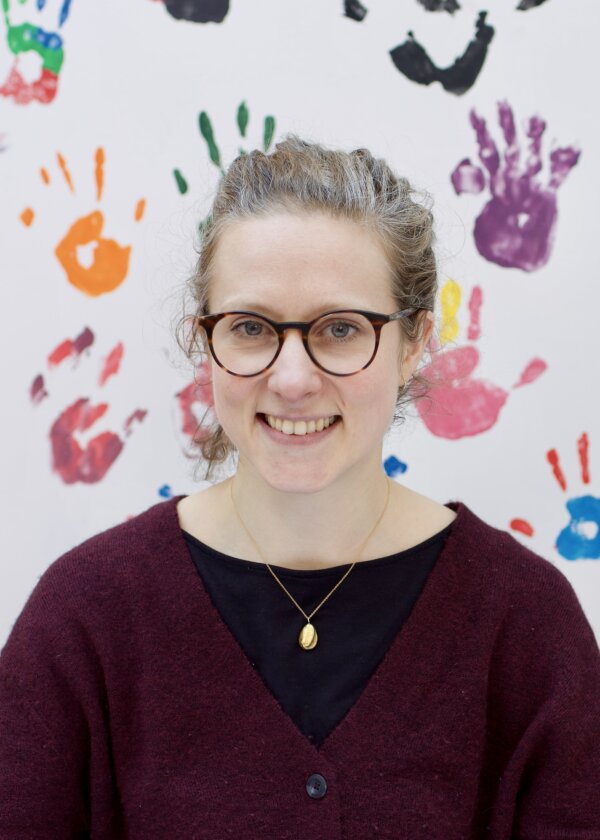
Georgie Kovoor, joined Family Futures’ multidisciplinary team last year as our first music therapist.
Can you think of a time when you heard a song or listened to a piece of music which connected with you in a powerful way?
Maybe you have memories of being sung to as a child and the way this made you feel. Or perhaps you’ve experienced being part of a choir and know the enjoyment and uniqueness of shared music making.
All of us have experiences of music in some capacity; whether that’s listening or playing, it’s all around us. Music is a universal medium with which we all have knowledge of or feelings towards. As Anthony Storr (1992) writes:
“No culture so far discovered lacks music.”
It is this universality that makes music such a useful tool in a therapeutic context with people of all ages and backgrounds. Not only is music experienced by everyone, but it is also so much a part of being human, from the early interactions of a mother and baby to the musicality of conversation and connection with those around us.
We are innately rhythmic beings and as Music Therapist, Joy Hasler (2017), writes:
“the process of developing life-engaging rhythms starts before birth and then develops through rhythmic engaging activities between the infant and the key attachment figure.”
For people who have been exposed to adverse childhood conditions, it is most likely that they have not experienced these early mother-baby interactions due to a lack of safe primary care givers. They may also not have learnt how to regulate themselves physically and emotionally, needing support from those around them to learn how to do this. This is where music can be a catalyst for change, enabling enactment of early mother-interactions and supporting physical and emotional co-regulation through rhythm and movement.
Every session looks different, depending on the client’s preferences and needs. In some sessions, there might be mainly improvised music making using a variety of instruments. In other sessions, the client may want to listen to music with the therapist, using familiar songs to connect and ‘be’ together.
For children and young people whohave experienced adverse childhood experiences and trauma, finding words toexpress themselves can often be too challenging or impossible. Using creativityand shared experiences of music in therapy, creates a space for exploration offeelings, experiences, and identity together without the pressure and need tonecessarily use words.
I often get asked if a child or young person needs to be able to play an instrument to access music therapy; the answer I always give is, “No, but an interest in music can definitely help.” It is important to remember that music therapy session are not music lessons – there is no ‘right’ or ‘wrong’ way of playing an instrument in the therapeutic context. Instead, the sound created should be focused on emotional expression and connection, rather than getting something ‘in tune’ or to the ‘right’ rhythm.
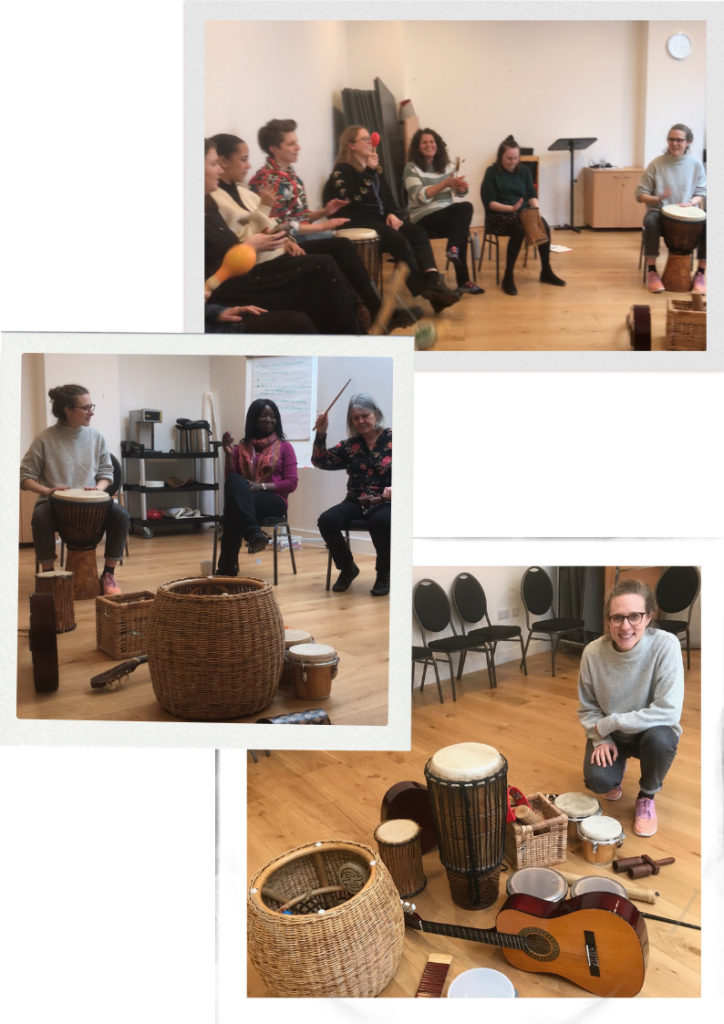
A music therapy session with the Family Futures team, Team Day, March 2023
The Family Futures Wellbeing Hub offers music therapy sessions to book as a 12-week programme or as part of a creative arts package of therapy. Call us for an initial half price consultation on 020 7354 4161 or read more / fill in our enquiry form here.
References:
Hasler, J.(2017) Music Therapy for Attachment and Trauma, Creative Therapies forComplex Trauma – helping children and families in foster care, kinship care oradoption, London and Philadelphia: Jessica Kingsley Publishers
Storr, A.(1992) Music and The Mind. London: Harper Collins.