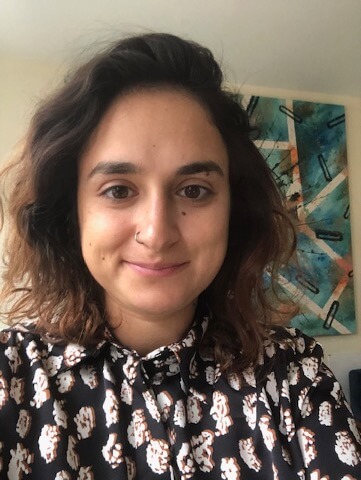
Sarah, Senior Psychological Therapist and Art Therapist at Family Futures, explains how art therapy supports healing from trauma in a safe environment at someone’s own pace
‘I can’t draw’ is something I often hear when beginning to draw with children as well as adults. The next question may be ‘Am I doing it right?’
Especially for children who have experienced adverse childhood experiences, beginning to make art can seem a daunting experience, likely to trigger a shame response. A child’s initial questions around beginning to make art may appear loaded with a fear of not being good enough or not living up to expectations.
There is a sense of chaos in the unknown of making a mark. The beauty in art making freely is that there can be no wrong answers.
The art therapist Dr Chris Wood describes how someone asking you to make a mark could induce a ‘milk white fear’[1] mirroring the blank piece of paper staring back at you. Marion Milner, psychoanalyst and artist, wrote about how she was always interested in painting, but trying would ‘leave her in a maze of uncertainties about what a painter was trying to do.'[2]
We are innately creative beings, and art making in a safe space with a therapist can bridge gaps where words feel too painful or difficult.
Making a mark, playing with clay, re-sculpting, destroying, repurposing materials, diagrams and collaging have the potential to help children and adults to find a voice, to feel enough and to support a person’s healing journey. There is honesty within the art making process, giving unconscious feelings a physical presence, safe enough to explore within the therapeutic relationship and its safe environment.
At Family Futures many children have experienced trauma. The part of our brain responsible for language is likely to shut down, leaving the child with unexplainable body sensations – a disconnect between mind and body. These sensations often translate into a fight/flight/freeze response of needing to survive, leaving the body in a hypervigilant state.
Art making can encourage the mind and body to reconnect, primarily addressing regulation to help the child feel safe. Giving a person a sense of agency to when and what they create can allow a release from trauma at someone’s own pace.
Art making with the support of the Art therapist gives way for traumatic memories to be processed in the present and reminds the child that the trauma is not occurring within the now. Memories can therefore be stored safely rather than eliciting an automatic fear response.
References:
[1] Wood, C. (1986) Milk White Panic: What we do when we tell them to draw and paint? Inscape: The Journal of the British Association of Art Therapists. Winter, pp. 2-7.
[2] Milner, M. (1950) On not being able to paint. Reprint, London: Routledge, 2010.